2024 update
7–11 minutes
Hi folks,
Following on from the post last year[1], there have been a solid quantity of new articles on avoiding and dealing with burnout. Considering we are in the Holiday season we thought it might be worthwhile to share a select number of them with you. Please see the previous (above) post for the definition of burnout, the differences between Workplace burnout and Neurodivergent burnout, and tips for recovery*.
Dora Rainmaker and team have been key researchers into neurodivergent burnout in recent years. Their 2020 paper “Having All of Your Internal Resources Exhausted Beyond Measure and Being Left with No Clean-Up Crew: Defining Autistic Burnout.
Autism in Adulthood defined it as the result from chronic stress in life and a mismatch of expectations and abilities without the right supports, which is characterized by pervasive, long-term exhaustion …, loss of function, and a reduced tolerance to stimulus[2]
One of the main issues with burnout is that it is often coupled with depression and lowered self-worth. Prolonged masking of ourselves is not healthy, and the downward spiral of productivity due to exhaustion will leave a person wondering their capabilities. It can be additionally difficult as neurotypical friends, family and colleagues may not understand what it is we are going through, which affects the efficacy of their support [2].
Last month Diversity Council Australia hosted a panel discussion unpacking the evidence that burnout is a inclusion issue[17]. A key concern was the compounding impact of systemic barriers, microaggressions, tokenism, or outright discrimination, experienced by marginalised people. It was highlighted that for neurodivergent employees, these factors can add additional cognitive and emotional labour, leaving them more vulnerable to exhaustion and burnout.
One of the key takeaways from the event was the need for proactive, inclusive solutions to prevent burnout. This pervasive issue is not just a personal problem but a systemic one that can be prevented by fostering more inclusive, respectful, and supportive workplaces. As organisations seek to build resilient and sustainable workforces, it’s clear that prioritising inclusion isn’t just a “nice-to-have” – it’s a necessity for the health and wellbeing of all employees[17].
In his recent Art of Autism article, ND Therapist Robert Schmus[3] does a great job of highlighting some of the key differences and additional load, separating Neurodivergent burnout from the classic workplace definition. For him it was an intense brain fog – a difficulty of linking ideas together in an extensive executive function breakdown, coupled with heightened anxiety. When burnout is left unchecked, these symptoms build up and can lead to shut down for an extended period of time. Robert’s experience feels very familiar in my recent experience of burnout as a downward spiral.
Robert goes on to highlight some of his key drivers of burnout, including prolonged masking, trying to meet unreasonable deadlines, being in hyperfocus for long periods of time without the necessary recovery time, and having far too many urgent deadlines at one time. Unclear targets and goals, and trying to hit targets in suboptimal conditions are some of the key stumbling blocks for ND folk. A poorly set up environment can make “deep work” difficult to achieve. In order to “catchup” people report working late at night or during holidays in addition to their regular hours. This can eat into recovery and social time, and further eroding support networks.
Devon Price gave a sobering account on research into the permanent effects of late-stage burnout. However, the recovery process is not about going back into the grind. It is about embracing different ways of achieving your goals, and sometimes setting different goals all together[4].
So, what do we do about Burnout?
Over the past year there have been a number of high quality resources and supports from within the neurodivergent community, as well as mainstream organisations, like Arts Centre Melbourne’s Arts Wellbeing Collective, and Black Dog Institute[18]. In this post I’ll highlight resources from within the ND community.
Rachel Worsley and Kate Hardiman’s podcast “Neurowork” is a collaboration of Neurodiversity Media and Unify 360’s workplace DEI consultancy. Neurowork focuses on managing creating inclusive environments, and has a number of recent episodes focusing on avoiding overload and recovering from burnout[5]. The importance of taking short and long recovery breaks is often overlooked. It’s important to short circuit fatigue, exhaustion and burnout before it becomes entrenched, and addresses Robert Schmus’s warning about multiple competing priorities and long chains of hyperfocus.
Neurowork also advocates for the need for clear communication[6]. Understand the steps and context of the work you are undertaking is essential to achieving better results with less stress. Regular open communication is essential for solving unforeseen issues promptly as a team, and supports individual DEAI based accommodation needs. Neurodiversity Media has some great resources and advice for creating environments for neurodivergent individuals and teams to thrive at work[6].
Kristen Hovet is a medical researcher and Science communicator behind the Other Autism podcast. In her episode “Autistic Burnout, Shutdown, and Social Hangover” she points out that flexible working arrangements are a big piece in reducing overload and burnout. Working from home arrangements can be perfect for deep work, and reduce social hangover and sensory overload[13]. This tracks well with the DCA Burnout and Inclusion findings that flexible working arrangements have been proven to positively impact employee mental health[17].
Reframing Autism’s Intersectional Advisory Committee released the exceptional Welcome Pack resource[7] in March this year. It’s a 200pg guidebook that is easy to read and paired with a 30pg workbook to help getting the clarity on what needs you have by asking the questions you may not have considered. It was very much needed and filled a gap that has been talked talked about in the community for a long time.
Reframing Autism also has a large variety of other resources and training webinars including a webinar training series on Autistic Burnout Resistance and Recovery for individuals seeking to understand the topic as well as managing their own and others recover from burnout. There is also a separate training module for mental health professionals[16].
ASAN AUNZ released their Self Advocacy guide last month[8]. It’s a document to help with the communication of needs, accommodations and boundaries. They have also released an app to help with communicating support needs and listing support services. ASAN in North America has equivalent resources to help guide the process to equity[9].
And it would be remiss of me if I didn’t mention two incredible books that landed this year, Jessica McCabes “How to ADHD: An Insider’s Guide to Working with Your Brain”[10], and Ludmila Praslova’s book “the Canary Code”[11]. Both of these are game changers and both are packed with resources.
Ludmila was featured on the Ted Podcast “Fixable” by Anne Morriss and Francis Frei[14]. Fixable has become one of my favorite go-to podcasts. Apart from their exception podcast on fixing work issues Anne and Francis have published “Move Fast and Fix Things”[15] which incorporates much of the advice here at the executive, primarily the communicating and trust building aspects.
That about wraps up the updates on burnout from 2024. There is a growing acknowledgement of burnout as a serious issue, with neurodivergent people being more heavily impacted. Workplace reform, including hybrid and remote work, and clearer boundaries are beneficial for all, with a growing range of mainstream professional and individual resources being created to increase support.
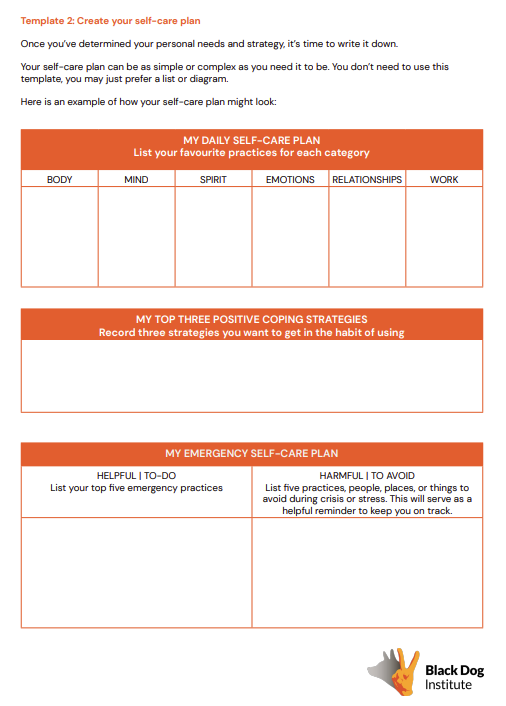
If you feel that you need support please see your General Practitioner or Mental Health Professional where you can, and trusted friend or family. It’s important to be proactive about your emotional wellbeing, speaking up about mental health is a great start. If you want to start at home, then the Black Dog Institute has a self care plan[18] as starting point to manage symptoms of burnout by helping you evaluate your coping skills, identify your daily self-care needs and replace negative coping strategies with positive alternatives.
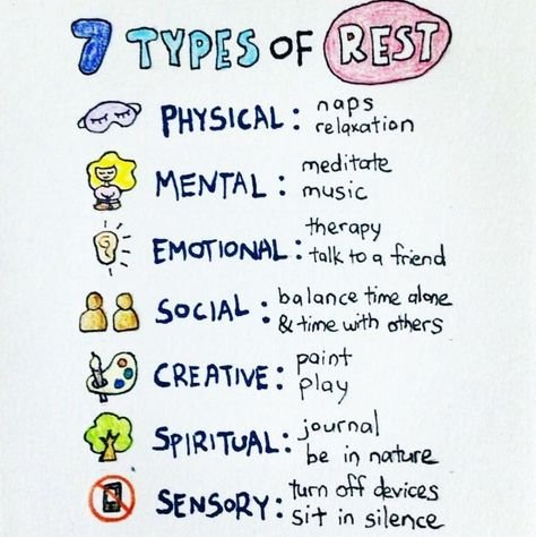
Hope you had a wonderful Holiday season, with all the types of rest you need. Looking forward to pushing boundaries in 2025.
Reposted from Neurodiversity and Mental Wellness Tessitura Community - Shelly Binkley & Heath Wilder
References
* When I’ve mentioned neurodivergent burnout, I’m including many neurotypes and the variety of challenges non-exhaustively. Speaking with people throughout the neurodivergent community, I’ve found a similarity of experience and overlap in management that warrants the title. There are of course more specific focus areas which are named as such. The previous post highlights burnout and fatigue with more specificity.
- Shelly Binkley & Heath Wilder (May, 2023) Burnout through many lenses – Neurodiversity and Mental Wellness Tessitura Community (reprinted)
- Dora M. Raymaker, Alan R. Teo, Nicole A. Steckler, Brandy Lentz, Mirah Scharer, Austin Delos Santos, Steven K. Kapp, Morrigan Hunter, Andee Joyce, and Christina Nicolaidis (Jun 2020) “Having All of Your Internal Resources Exhausted Beyond Measure and Being Left with No Clean-Up Crew”: Defining Autistic Burnout Autism in Adulthood
- Robert Schmus (Aug, 2024) Autistic Burnout The Art of Autism
- Dr Devon Price (Oct, 2024) You Might Not Recover from Burnout. Ever. What grows from the ashes of your old life? Dr Devon Price Substack
- Rachel Worsley & Kate Hardiman (Dec, 2024) What are your recommendations for managing energy levels and burnout in teams/environments that demand high performance? Neurodiversity Media and Unify360
- Rachel Worsley & Kate Hardiman (Dec, 2024) How to Fix Neurodivergent Burnout At This Time of Year Neurodiversity Media and Unify360
- Intersectional Advisory Committee (IAC) (Mar, 2024) Welcome Pack Reframing Autism
- (Nov, 2024) ASAN Self Advocacy Toolkit ASAN AUNZ
- (Dec, 2024) Autistic Advocacy Resources AutisticAdvocacy.org
- Jessica McCabe (Jul 2024) How to ADHD: An Insider’s Guide to Working with Your Brain howtoadhdbook.com
- Ludmila Praslova (Oct, 2024) the Canary Code the.canarycode.com
- Shelly Binkley & Heath Wilder (Dec, 2023) 7 Types of Rest Neurodiversity and Mental Wellness Tessitura Community
- Kristen Hovet (Aug, 2024) Autistic Burnout, Shutdown, and Social Hangover – The Other Autism
- Francis Frei & Anne Morriss (Nov, 2024) The power of neurodivergence in the workplace (w/ Master Fixer Ludmila Praslova) – Fixable
- Francis Frei & Anne Morriss (Oct, 2023) Move Fast and Fix Things – Harvard Business Review
- Autistic Burnout – Resistance and Recovery Community Webinar – Professional Webinar (2024) Reframing Autism
- Why Burnout Is an Inclusion Issue (Nov, 2024) Diversity Council Australia
- How to use self-care planning to improve your emotional wellbeing, even when you don’t think you need it (May 2023) Black Dog Institute








 Heath Wilder