The story of my Macaulay Culkin Christmas (thus far)! I’ve been updating on Insta and it’s linked meta platforms.
I’d been toying with the idea of getting out of my regular reach for the holidays, but come the Fri 19th Dec when I was putting the mountain of projects on hold, and saying goodbye to friends departing long term. I finally got to 11pm and said “enough”.
Within 48hrs, incl. one final neurodivergent bookclub, and a Christmas themed D&D game with some close friends, I’d recovered enough mental functioning to make a plan. 10 hrs prior to boarding the plane I booked my ticket out and a place to stay when I landed.
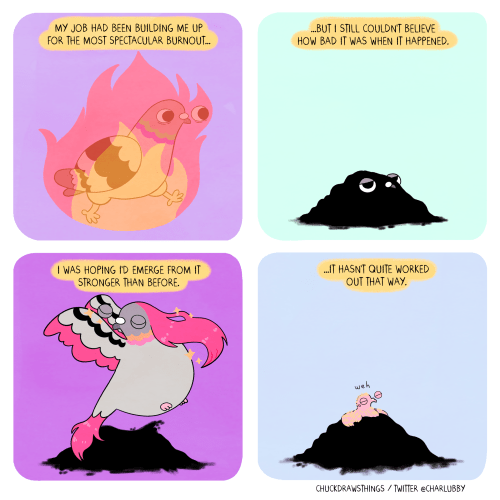
I have had an overarching need is to start repair on my brain. 2025 was the hardest year yet. Just when I’d thought that burnout had hit it’s core and I am at my last reserve I found myself in another layer, and in myself another layer of resilience. I could feel my sense of self being stripped away as I lost the more confidence, and watched my skills evaporate as if I was in the final chapters of my own personal Flowers for Algernon. It made sense to go to my upside-down – where the weather was cold, my expected outcome was not failure, and people called me friend.
The flight out had a hicup but I’m used to that now, and what would have been a problem in the past is now a bit of business.
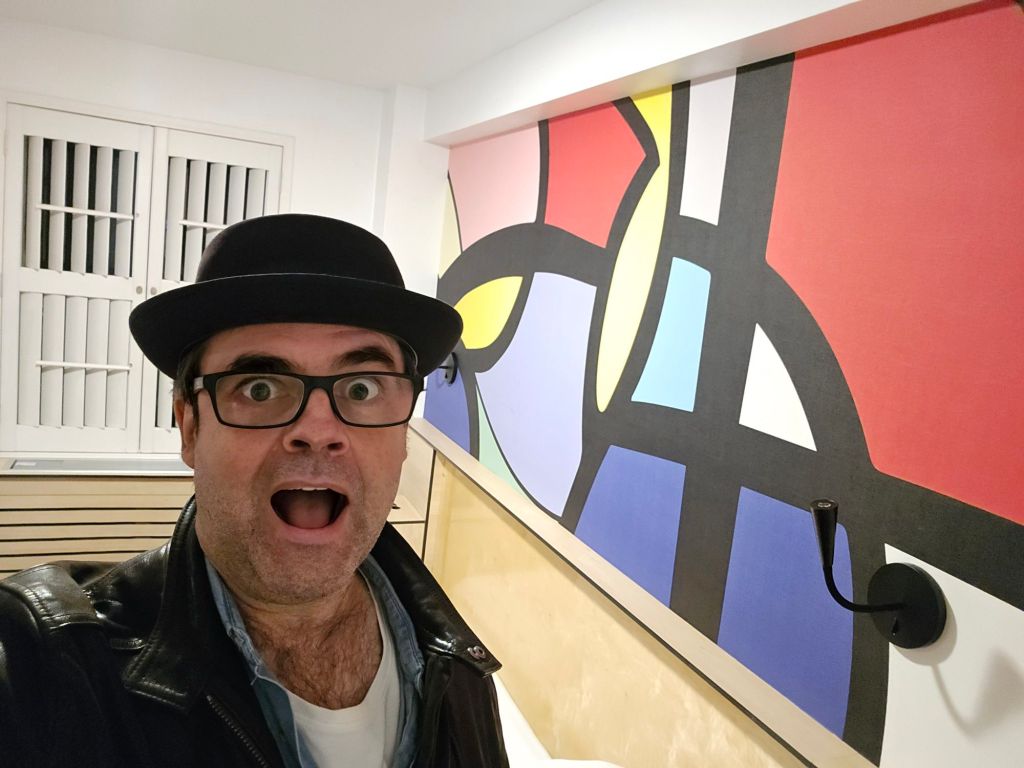
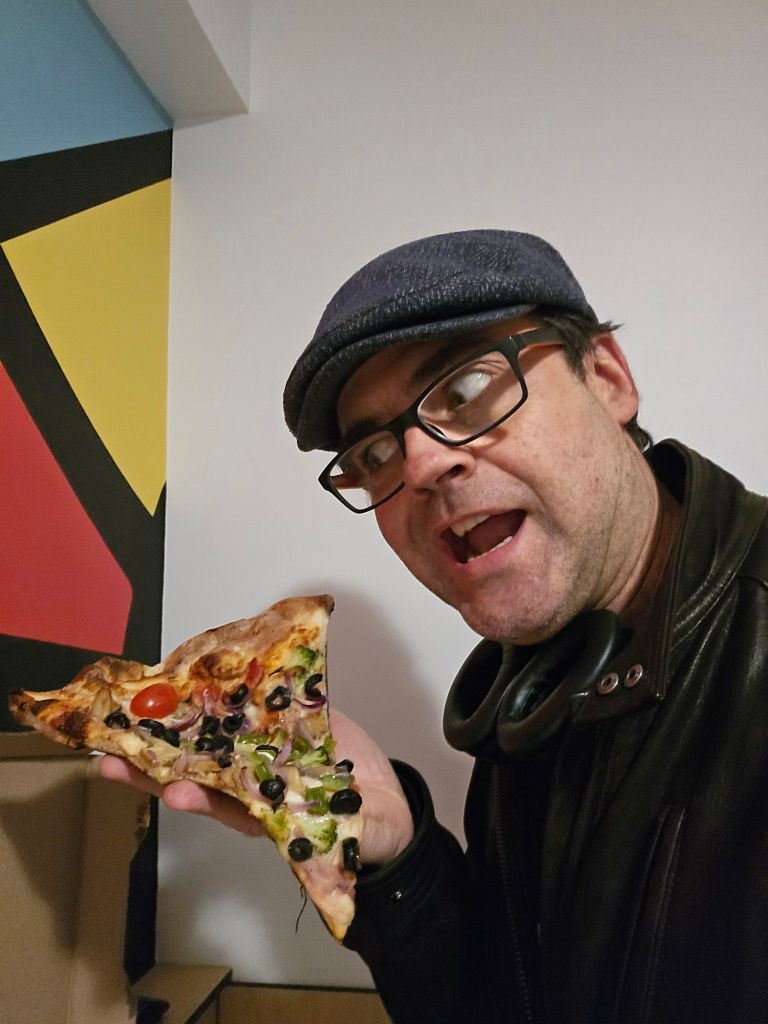
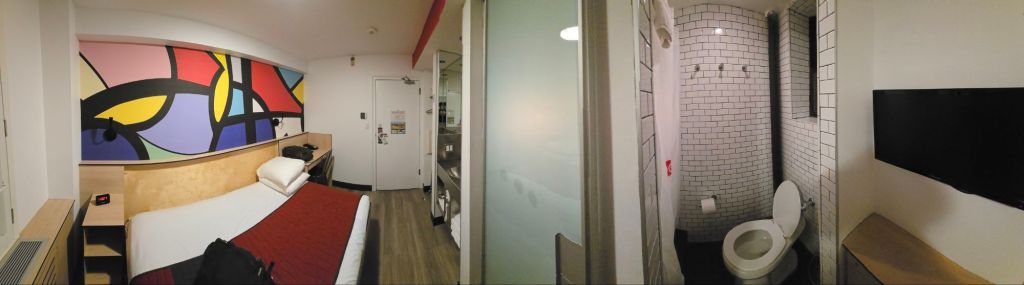
I landed at Newark Airport NYC and made my way to my excellent tiny hotel Pod51. The rooms are Piet Mondrian themed! I braved the chill and found a pretty jumping Pizza store on 2nd Av blaring Latin American dance music for a few partying folks. Was a good vibe. I escaped with 2 slices bigger than my head(!), got back into my room by midnight, watched local news and had pizza in bed. SUCCESS!
Since then Jordan at the pizza store will slip me an extra slice of some garlic bread when I go. Great guy.
Slice the size of my head Mondrian room
Next day I caught up with my friend Dale @ Beyond Sushi for great vegan Sushi lunch, before his expert tour of Midtown & Central Park West.
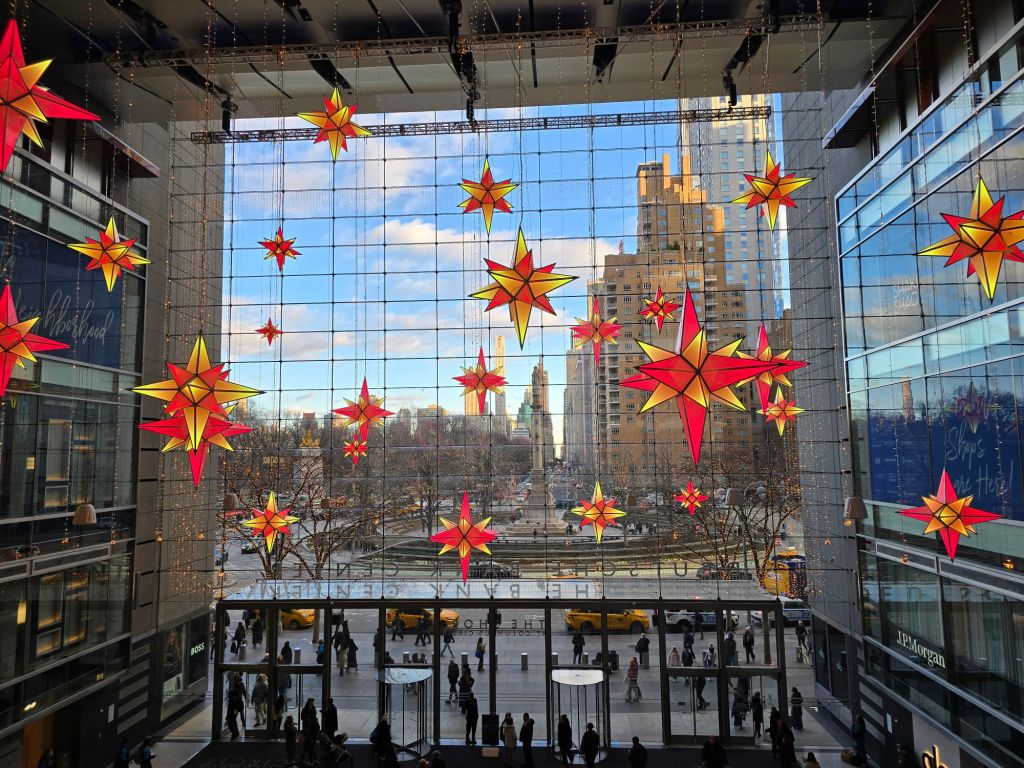
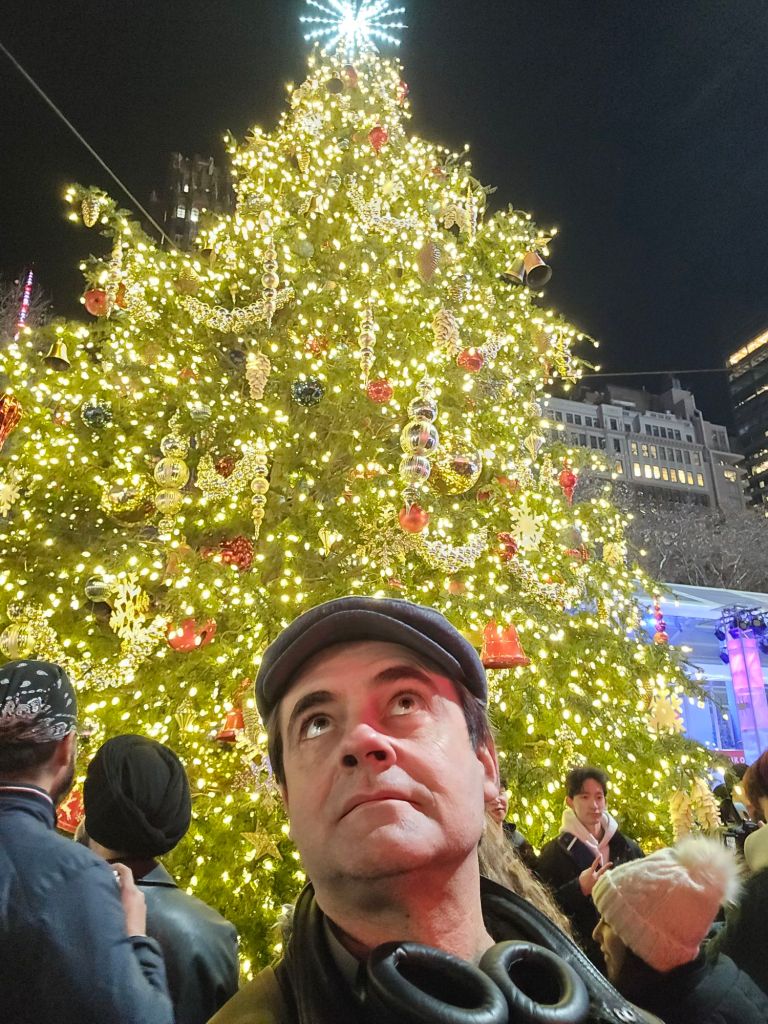
I took myself to Macy’s to buy myself a gift, for Christmas Day then Bryant Park skating rink. Then home to prepare to foil the sticky bandits. The gift is more pants for the cold – is up or in wearing two pairs. I freaked out a little the first time I went to the bathroom and forgot. I thought I’d turned into Ken.
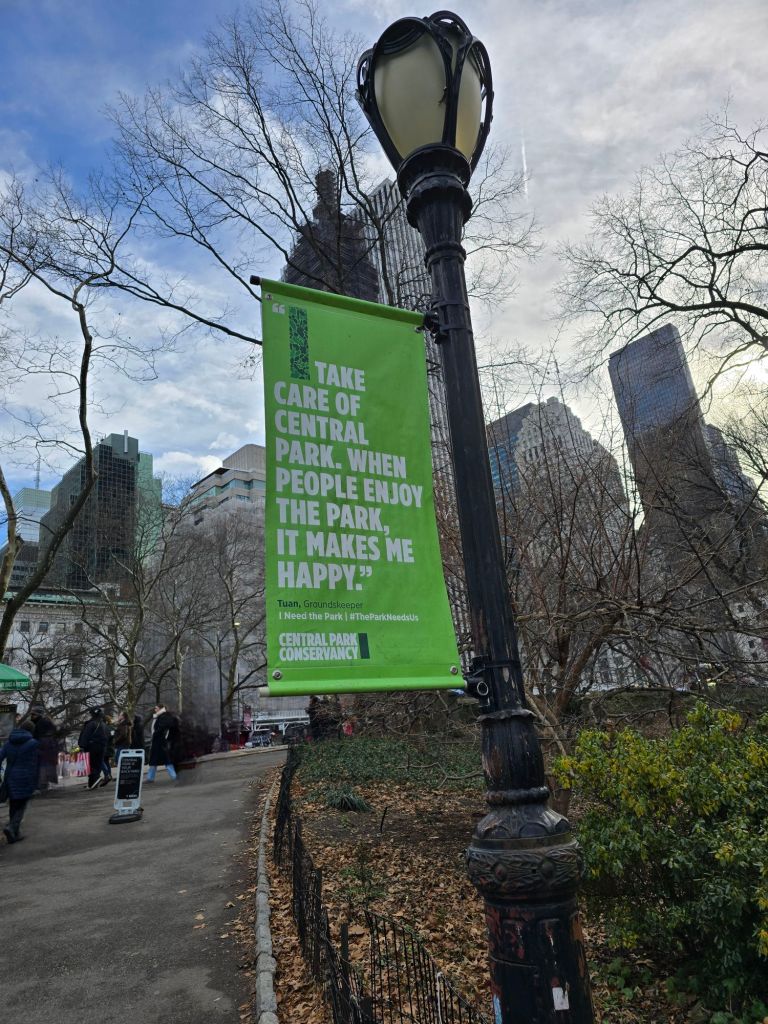
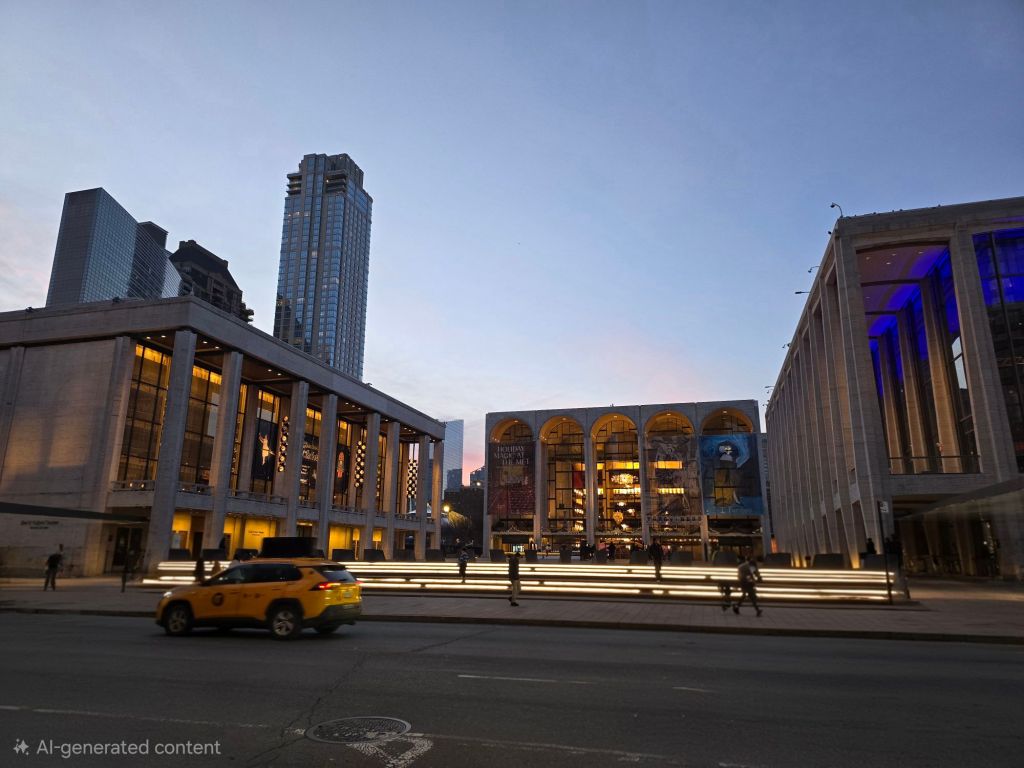
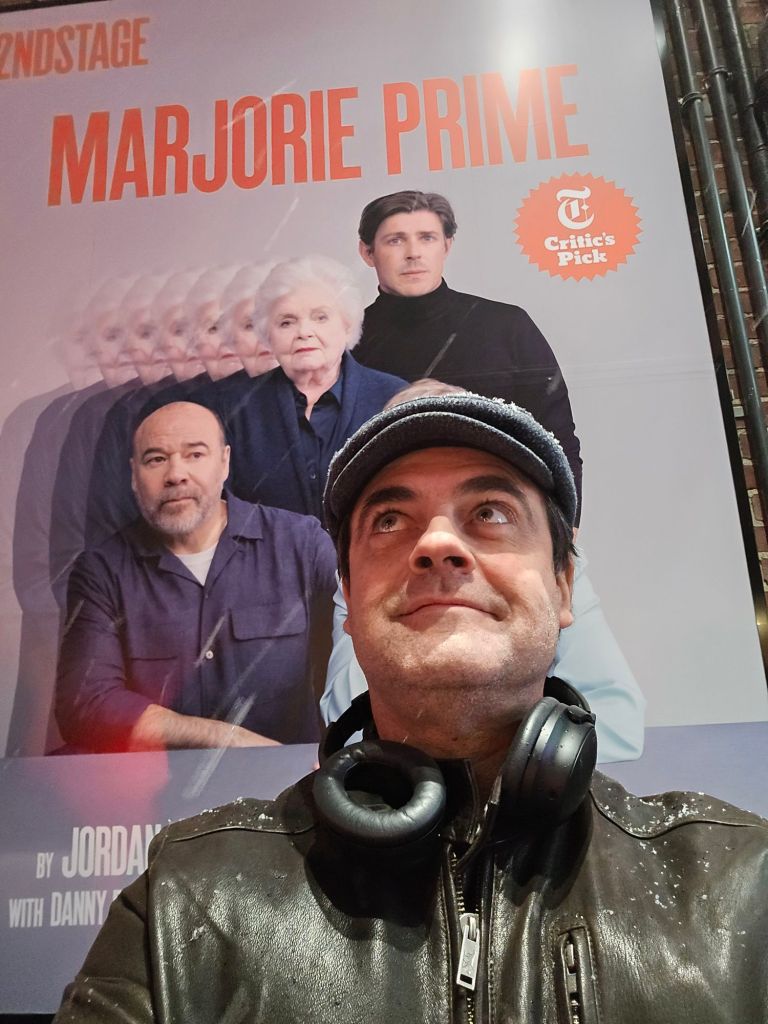
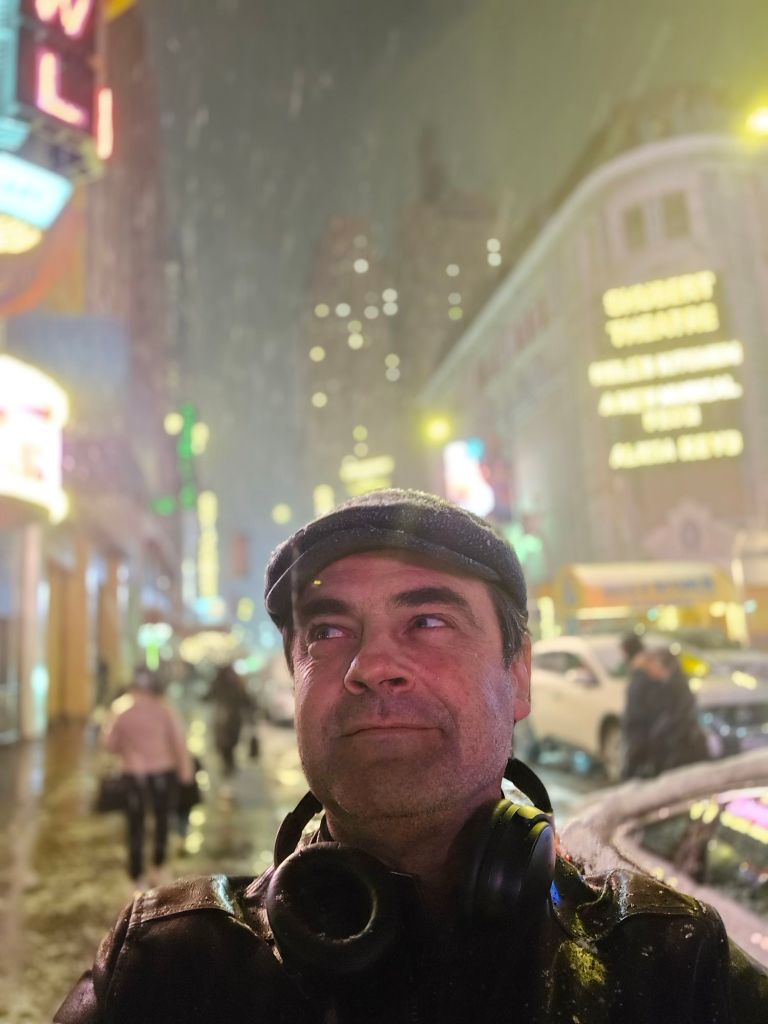
After spending Christmas day wandering through Central Park, finding a diner in the Upper East side NYC and generally being a badly organised tourist (by design!) I was treated to a play Marjorie Prime (by 2nd Stage) by my friend Dale. While we were eating all the Tofu at Ollies Szechwan I happened to glance out the window and it was snowing!? I’ve never seen snow in my 39yrs (and some months*) existence so this was pretty AuDHD brain popping. We had a great conversation on the issues with AI, and a wonderful show in an incredible theatre. Adding a Christmas snowfall definitely lightened the ToDo column of the bucketlist.
*177
I’m very grateful to Dale who’s been exceptionally patient with my poor planning and touristy excitement as I repair my broken brain on this trip. Also he keeps me eating well – difficult to do solo when burnt out.
Marjorie Prime (2nd Stage) & for on NYC for Christmas
I recently came across a social media post commenting on an AI picture of a group of smiling people largely women. If was quite innocuous as an image but the ire of one commenter was drawn from the usual place – AI is trained on real images without concent
A little like:
accountxyz: hope the people you all use in prompts start suing the heck out of all of you
Okay. Most images are built from AI trained on massive banks of images largely unattributed, making that some class action.
Better though (if we want to get social warrior – which I’m down for) how about some lawsuits happening on predatory media, fashion and entertainment industry bodies, organisations and individuals, that have destroyed young women’s lives and careers for profit; for that matter what about accountability by the individuals that have openly joked about their dehumanising and abuse of women. Let’s not leave men out – the hazing and humiliation of young men in those industries is also a known blight that, by silence, we are complicit.
Whilst that may be somewhat off topic, a person’s right to own their own identity, is heavily impacted by data protection and it’s regulation in the current era. Legislation tends to move at a glacial pace compared to digital technology. However, legislation has been uncaristeristically nimble, as seen in the EU data reforms, and in business with Cloudflare and others moving to take control of bot crawling. The use of AI in increasing the speed and volume of trials for combating COVID, pushed reforms to bringing pharmaceuticals to market, at a rate that was previously implausable.
On a different tactic … how about the artists that have been plagiarised – but not compensated – for models being trained on their work?
The digital era has invented some models for mass distribution & monetisation that could be used in the training up and prompting of outputs for AI. The Spotify model is probably the most familiar example. These models arose in the digital frontier, in a time where torrenting ruled, and artists control of their IP was threatened. It’s been said that this led to better control for the studios than the artists. From the Wild West of torrent downloads, more was gained technologically than was redressed ethically. Better ethical distribution of the equity is always a goal.
Philanthropically there is potential in a model where the incredible profit margins from AI start-ups and established tech giants are “encouraged” to be farmed back into art and social programs. NGOs, NFPs, Government and community led organisations are better positioned to lead the redress societal imbalance, and best avoid the conflict of interest in distribution of that gain. It isn’t a direct compensation for artist IP, rather it’s a longer term sector and societal solution, which works more in terms of redistribution of individual wealth gained from the common wealth.
That being said, there are options other than “Ban the AI”. Artificial Intelligence is past cancel culture. What that means is we need to ask ourselves as individuals, communities and societally, what are the potential risks, what are the possible mitigations of those risks and what are the opportunities – and for whom? This is a long game. If we move together as a society, bottom to top, shoulder to shoulder, the better our future becomes. The biggest opportunity is for building our ethics into our solutions. And now is precisely that time.
O, she doth teach the torches to burn bright! It seems she hangs upon the cheek of night Like a rich jewel in an Ethiop’s ear; Beauty too rich for use, for earth too dear! So shows a snowy dove trooping with crows, As yonder lady o’er her fellows shows. The measure done, I’ll watch her place of stand, And, touching hers, make blessed my rude hand. Did my heart love till now? forswear it, sight! For I ne’er saw true beauty till this night.
Google drive just snuck this photo of mine past my feed. For an algorithm it’s darkly humorous, having recently lost a close friend. On the other side is the cold pacific ocean beating on these cyclopean blocks.
I used to come here a lot between the 90s and 2015. This picture however was one of the last and it feels a lot like that time;
wind harsh and sharp, the colours unambiguous, the sea more solid than cement;
(This piece of writing was created by my incredible friend Shelly and myself for our Neurodiversity and Wellness, Arts and Culture community that we chair)
You might hear the term “Burnout” talked about a lot and maybe you’ve felt that way yourself.
But what is burnout?
How does burnout differ between different communities?
And what can you do about it for your co-workers, friends and yourself?
Defining Burnout
The World Health Organisation (WHO) points out that whilst burn-out is included in the 11th Revision of the International Classification of Diseases (ICD-11) as an occupational phenomenon, it is not classified as a medical condition.[1]
Burn-out is defined in ICD-11 as:
“a syndrome conceptualised as resulting from chronic workplace stress that has not been successfully managed. It is characterised by three dimensions:
• feelings of energy depletion or exhaustion; • increased mental distance from one’s job, or feelings of negativism or cynicism related to one’s job; and • reduced professional efficacy.”
WORLD HEALTH ORGANIZATION (MAY, 2019)
However, as the boundaries between work and home have blurred throughout the covid years, the occupational distinction has also become less fitting. Evidence shows that burnout makes no distinction between paid or unpaid work and people undertaking unpaid home or care duties can also be impacted[2].
The Black Dog Institute and the UNSW School of Psychiatry[2a] have carried out studies into factors that commonly concur with burnout, including:
Anxiety/stress
Depression and low mood
Irritability and anger
Sleep disturbances
Lack of motivation or passion
Lack of concentration, memory loss or brain fog
Withdrawal from others
Physical symptoms such as aches, headaches, nausea and low libido
Emotional fragility
It raises the chicken v egg question on whether these factors are a cause of or caused by burnout, or whether they are all a symptom of an underlying issue. The same researchers are also undertaking a followup study to further investigate the features of burnout and its relationship with depression.
Neurodivergent Burnout
In the neurodivergent communities, conversations about burnout are quite common. In fact many neurodivergent people come to uncover their uniqueness due to the burnout of trying to fly under the radar. The challenges of living and working in a society not designed for us can mean frequent overload that can push us into meltdown, shutdown, and burnout. Also life-changes can exacerbate challenges, for example transitioning from school to work, experiencing a mental health crisis, or the death of someone close[13]. Stigma can make prevention and recovery even harder.
So how does neurodivergent burnout differ from the WHO defined burnout?
A notable difference is in the causes of burnout [6]. Some of factors that lead to burnout for ND folk are:
Repeated sensory overload
Long term masking
Having social/sensory needs minimised by others due to appearing “fine” (i.e. “successful” masking)
Not having access to the appropriate level of supports & accommodations
Difficult or unreachable expectations from family, school, work, or society
Executive Functioning fatigue following a number of stressors or transitions
When the overall load exceeds abilities + supports = burnout
But impacts of burnout can also present differently, including [7]:
Loss of skills
Loss of interest in dedicated interest areas
Emotional regulation issues
Added anxiety and depression
A study by Dr Dora Rainmaker at Portland State University[11], involved interviews with autistic adults. Whilst her studies have been in the autistic population, the sentiment aligns with other neurodivergent communities. Findings included:
“… struggling with independent living, loss of self-belief, and being frightened that the loss of skills from the autistic burnout might be permanent.”
Dr. Dora Rainmaker
The results also pointed to a “lack of empathy from neurotypical people, who had difficulty understanding or relating to the autistic person’s experiences.”
What can we do about it?
Policy
On a policy level, it may be good to know that groups such as the Black Dog Institute are campaigning for workplace reform through methods such as their White Paper[9]. Actions your organisation can take include:
Evidence-based training for managers regarding the resources available and actions they can take to recognise and respond to mental health risk factors in the workplace.
Building mentally healthy workplaces.
Taking immediate action on bullying, sexual harassment and assault.
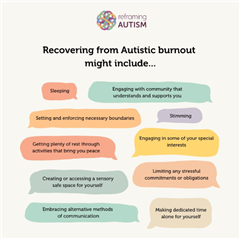
Self-care
The most important way to recover is prioritising self-care as a protective measure against burnout and other mental health issues. However self-care is often the first thing that gets sacrificed to work demands and stress.
So what is self care?
“Self-care refers to the activities and practices that we deliberately choose to engage in on a regular basis to maintain and enhance our health and wellbeing. Regular practices may include exercise, reading, meditation, disconnecting from technology, or talking with a friend or family member.”[10]
“When you take time for yourself to rest, reset, and rejuvenate you will actually have more energy to meet the demands of daily life as well as reduce or avoid the symptoms of mental ill-health.”
Dr Jan Orman
But what does Neurodivergent self-care look like?
For Neurodivergent folk there are a few ways to recover in addition (or instead of) neurotypical burnout recovery. In fact it’s worth noting that many neurotypical recovery techniques and interventions can be ineffective or even more overwhelming. Social support can add to overload, and even mindfulness may need a special touch as described by Sue Hutton[14].
Neurodivergent affirming recovery methods can include [8, 11, 12]:
Deliberate reining back of tasks and responsibilities
Prioritising rest, recognising the necessity of healing, and equitable productivity
Careful unmasking where appropriate
Slow refocus on areas of interest and energy giving environments like nature
Outsource executive functioning tasks
Attending to sensory needs
Self-care Strategy
Prevention of burnout comes with increased awareness of needs and accommodation for those by workplaces, family and community. Clear boundaries and formal supports are also key to keeping the overload at bay.
The Black Dog institute has a comprehensive self care template designed so that you can craft a personal self-care strategy that works for you. It will guide you through the 4 steps of self-care planning:
If you are feeling burnout, run down or depression it’s worth talking to a mental health professional starting with your doctor. But if you are feeling that that’s a big first step try reaching out to the people around you and in your communities. Talking can help and it can make that journey more manageable by taking it one step at a time.
Go well!
PS– what to learn more? Check out this upcoming workshop on Autistic Burnout:
Saturday 2nd April is World Autism Awareness Day (or what a lot of us autistic folk like to rebrand Autistic Appreciation Day). You’ve probably heard me talk a lot about what it’s like to be autistic and neurodivergent in the arts and culture space.
But it’s not time for me to talk. It’s time to clear a space for some black autistic voices. Autistic BIPOC folks in the neurodivergent community and media don’t get heard anywhere near enough. So here are some to get you started
The holidays can be rough for everyone. And for us Neuro Distinct folx it can be difficult to explain how differently tough they can be. Routine changes, flashing lights and loud music, social pressures, crowds and fine motor control puzzles can throw a spanner into your executive function machine, at the very least.
For me it is an exorbitantly overwhelming time that I struggle to keep just shy of whelmed. But however you want to celebrate – small, big, quiet or noisy – your way is valid.
That might mean:
Taking time out from a big social scene to lie on your bed with NC headphones on and recuperate (ie: get some spoons back)
Blocking out “Do Not Disturb” time to revise your plan for the next few days
Opening gifts the way you want to (for me it’s one piece of tape at a time)
Politely stating your boundaries
Getting a buddy to help you out when it gets too much (or too little)
How to ADHD has really been on the money lately with incredible work tips that have really sung to me.
Taking on too much work.
Ah YES! Over committing is a huge challenge for my life for a number of reasons. Living a life in line with your values seemed a bit like the title of a pop psych book from the 90s (and personal baggage for another time). However stepping back for a minute and looking at what life values I need to prioritise was really great. Instead of fitting in one more request for other people, I really need to hit pause and take time out for myself, and the things on the top of my value list that I’m ignoring. Things like personal health and relationships.
One way that I’m looking at that at the moment is by monitoring my emotional health using the Daylio app. It also tracks potentially related stuff like healthy eating, exercise and personal timeouts. Because the best way to get an over committed data junkie to take time out is with the lure of more data.
The other thing is Trello. I talk about this a lot. I have a personal Kanban for projects that I need to achieve and hard and soft deadlines for that. For other work requests I’m building in two times a day of 30 minutes where I clear &/or prioritise those requests. Of course I can’t ignore everyone (as much as that sounds like heaven) but it does mean that I can block out times to focus and on what task knowing that the alerts will get dealt with in their own space.
Monotasking
That’s a great segue into the other great vlog – Monotasking. It’s a great reminder about the illusion that multitasking is somehow good. I’ve known for a long time that my brand autistic neurotype deals with interruptions by crashing my brains hard drive. It’s no secret that changing my focus requires a good 5-10 seconds to shelve what I was doing and making the turn. Even then it takes a bunch of effort to do. But split focus is also a pain for other neurotypes.
Monotasking is a great way to do lots well. Blocking out slabs of time to get things done. It’s also good to block in slabs of time to do social or answer people’s questions. It’s an idea I want to try out more and see how it goes.
Here are the two quick YouTube eps that I’m talking about. Love to hear the ways you are hacking your work for your brain.
It’s a lovely sunny winter weekend afternoon over here in Sydney lockdown. I’ve just made a batch of spinach and cheese arancini and am contemplating the medium future in the way that you do when you are observing time by the rate that a cat has to shift its position on the bed to remain sleeping in the sun.
TLCC2021 stirred up a few thoughts for me. One was inspired from the many incredible sessions that I went to from the Tessitura Enterprise team (whom I always imagine as being Starfleet Officers). I succumbed to their insistence that I finally read CRM at the Speed of Light, and not leave it as a shelved trophy for my Zoom background.
The other was this blog post on the ADHD tax, that I’d been thinking about for some time. If you are not familiar there has been a term floating around the online community about the concept of this tax, the cost to ADHDers for replacing things that have gotten lost, credit score hits from forgetting bills, late fees for things that have not been returned on time, impulse buys for things that we honestly don’t need, etc. It is one of those things that ADHDers will sigh and agree, and a recent Reddit post with almost 9000 upvotes and 700 replies underscores that sentiment.
Back to reading Paul Greenberg, I was at around chapter 2 on collaborating with customers when those two thoughts crashed together. At TLCC I was banging on about making equity for neurodivergent folks in the workplace. This is incredibly important for belonging and inclusion for our colleagues. It is a simple step to widen that thought process to our ND customers.
I’m going to quote Starfleet’s quote of Paul Greenberg definition of CRM
“CRM is a philosophy and a business strategy supported by a system and a technology designed to improve human interactions in a business environment”
Paul Greenberg, CRM Magazine, October 2003
It’s that final bit that really is the kicker for me. In CRM at the Speed of Light 4th ed Paul goes on to define Social CRM as
“Social CRM is a philosophy and a business strategy, supported by a technology platform, business rules, processes, and social characteristics, designed to engage the customer in a collaborative conversation in order to provide mutually beneficial value in a trusted and transparent business environment.“
Paul Greenberg, CRM at the Speed of Light
The collaborative conversation in a trusted and transparent environment is important because, as we continue to see, we need to walk the values we talk.
So here is my pitch. In the interest of a modern and inclusive CRM (business and customer) relationship, how are arts orgs helping our customers with the ADHD tax? How are we helping patrons remember shows with pre show emails? How are we giving our customers clear and actionable ways of exchanging without judgement? What are our rules with regards to a cooling off period on impulse buys? A friend’s (Martin Keen) recent forum post on adding an iCal element to booking confirmations was a great thinking point on inclusive design and being broad in our DEAI goals.
There are a number of business rules, processes and technologies that we can use to engage our customers in ways that make our relationship stronger. I’m excited to look at my own organisation’s accessibility from increasingly broad perspectives.



 Heath Wilder